


7-step turnover cleaning checklist for deposit-ready GTA units
This turnover cleaning checklist is written for GTA landlords, condo boards, and property managers who need a room-by-room, timeline-driven workflow that protects damage deposits and minimises vacancy. Follow the seven numbered steps below, hand the relevant pages to your cleaner or in-house crew, and use the photo and documentation protocol to support disputes or Landlord and Tenant Board (LTB) filings.
How to use this 7-step turnover cleaning checklist
Intended users and outcomes
Use this checklist at tenancy end, when prepping a new listing, or when scheduling a deep clean between occupants. It applies to condos, townhomes, and houses across the GTA. Aim to produce a deposit-ready unit: clean, functional, and documented so any chargeable repairs are defensible. For timing guidance, see the Binx landlord turnover guide linked below.
Timeline at a glance
- Day 0: Tenant confirms move-out time and pre-move-out inspection is completed.
- Day 0–1: Book trades and schedule cleaning based on inspection findings.
- Day 1–3: Deep turnover clean, photo documentation, final inspection and sign-off.
- Day 3: Move-in inspection and tenant handoff, or keys held pending follow-up repairs.
Adjust the schedule for building rules, unit size, and contractor availability.
Printable template and professional assessment
Use the room-by-room lists below as a printable handout for cleaners and inspectors. For a pre-listing evaluation that also maps building access rules, consider Fastcan’s property assessment for rentals: property assessment for rentals.
1. Pre-move-out inspection and documentation
What the inspector records
Complete a formal inspection before scheduling cleaners. Record unit condition with wide-angle and close-up photos of each room, note stains, holes, odours, missing items, appliance condition and meter readings. These records define cleaning scope and separate normal wear from chargeable damage.
How to document alleged damage
- Take multiple photos of each issue, label each file, and include the inspector name and date.
- Collect receipts, warranty documents, or installation notes for appliances and fixtures where relevant.
When to schedule cleaners and contractors
Decide between a maintenance clean and a deep turnover clean based on the inspection. Book trade contractors before or alongside cleaners if repairs are required to avoid rework.
2. Room-by-room cleaning tasks and standards

Kitchen checklist
- Defrost, clean and sanitise fridge and freezer inside and out; remove debris and label shelves if required.
- Degrease stove, hood and backsplash; clean oven interior and oven racks.
- Wipe inside and outside of cupboards and drawers; clear crumbs and replace liners if damaged.
- Sanitise sink and taps; check and clear drains.
- Clean countertops, backsplashes and light fixtures; spot-clean walls.
Bathroom checklist
- Descale and disinfect shower, tub, sink and toilet; clean grout and tile edges.
- Polish mirrors, clean exhaust fan grills and replace or clean shower curtains or liners.
- Sanitise fixtures and flag any caulking or grout that needs repair.
Bedrooms and living areas
- Dust and wipe all surfaces top to bottom, including light switches and door hardware.
- Vacuum and treat carpets for stains; clean under furniture and inside closets.
- Wipe baseboards, vents, blinds and window sills.
Floors, windows, balcony and utilities
- Mop hard floors, remove scuff marks and treat grout where needed.
- Clean interior windows and glass doors; sweep and clean balcony surfaces, clear drains and note structural issues.
- Record utility metre readings when applicable and attach to the inspection notes.
Supplies, PPE and standards
Standardise cleaning supplies and PPE: microfiber cloths, approved disinfectants, degreasers, floor cleaners and gloves. For consistent results, adopt a room-by-room framework similar to professional operators; see the industry checklist examples linked below.
3. Photo and timestamp evidence protocol
Required shots and angles
Take mandatory before and after photos for every room: full-room wide shots from two opposite corners, doorframe view, close-ups of stains or damage, appliance serial numbers where relevant, and an entrance shot showing the unit number or hallway context.
Photo naming and secure storage
- Filename convention: YYYYMMDD_UNIT_ROOM_ANGLE_inspectorInitials.jpg.
- Store images in a timestamped cloud folder with restricted access to preserve chain of custody.
Mandating timestamped before/after photos reduces disputes and strengthens LTB claims. For platforms that integrate photo evidence into job records, see CleanOS.
When to use video
Short videos help document odours, HVAC sounds, leaks or unfolding issues. Use video for walkthroughs when a condition may be disputed later.
4. Coordination and timeline with movers and cleaners
Typical timeline templates
- Same-day turnaround: suitable only for cosmetic tidies and when pre-inspected, typically requires a two-person crew for a one-bedroom.
- 24–48 hour turnaround: standard for deep cleans with light repairs and photo documentation.
- 72-hour turnaround: needed when multiple trades are scheduled or larger repairs are required.
A Canadian landlord turnover guide recommends planning 1–3 days depending on scope; use your inspection to select the appropriate window.
Staffing and tools for fast turnovers
- Assign one lead cleaner to collect photos and sign off, plus one helper per 500–700 sq ft for efficiency.
- Use a shared checklist or app so cleaners upload evidence in real time and tasks are verified before the final inspection.
GTA-specific booking notes
Book around peak moving days and building rules. Reserve elevator padding and loading dock slots early to avoid delays in condos.
5. Condo and building access rules that change the checklist
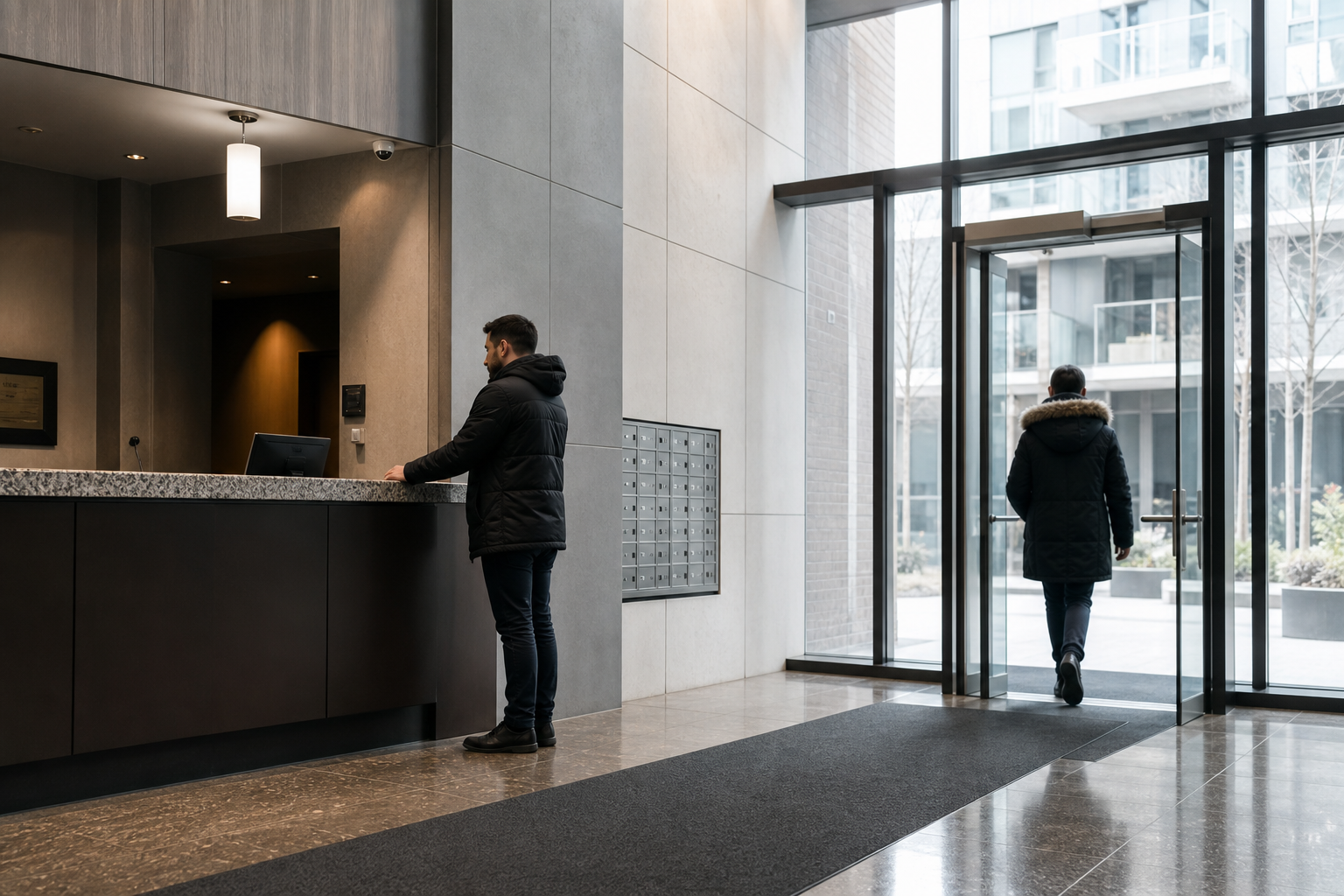
Typical condo restrictions
Many buildings require concierge notification, elevator bookings, padded protections, registered contractors or specific insurance. They may limit cleaning chemicals or impose quiet hours. Always obtain written permission and keep proof with the job record.
Garbage, recycling and loading protocols
Follow building schedules for bulky waste and recycling. Arrange temporary storage for removed items to prevent fines or rejected pickups.
When to use in-house staff
If the building requires registered contractors or supervised access, use your property manager or building-approved staff to avoid compliance issues. For a property assessment that maps building requirements, see Fastcan’s property assessment page.
6. Damage versus cleaning: deposit-ready acceptance criteria
Sample acceptance rubric
- Pass (no charge): Minor scuffs under 2 cm, light carpet shading from age, loose wallpaper corners that do not affect use.
- Chargeable cleaning fee: Heavy staining, persistent pet odour, biohazardous waste, or excessive filth requiring specialist treatment.
- Chargeable repair fee: Holes, cigarette burns, broken fixtures or deliberate damage beyond normal wear and tear.
Recording costs and pricing repairs
Attach cost estimates and invoices to the move-out report. Dated photos and contractor quotes make a stronger LTB claim than subjective notes. Use the same rubric consistently and include it with the inspection report to reduce disputes.
Handling tenant objections
If a tenant disputes a charge, present pre- and post-move photos, inspection notes and invoices. If negotiation fails, documented evidence speeds LTB resolution.
7. Handoff, move-in inspection, and when to call for legal or LTB support
Move-in inspection and tenant sign-off
- Conduct a walkthrough with the incoming tenant, complete and initial the move-in condition report, collect a signed keys receipt and confirm utility setup directions.
- Attach the dated photo folder and condition notes to the tenant file and provide a copy to the tenant.
When to escalate to legal or the LTB
Escalate when evidence shows deliberate tenant-caused damage, unpaid repair invoices exceed the deposit, or negotiation fails. Keep full photographic records and receipts to support any application. Fastcan offers integrated legal and LTB support and a Rental Guarantee that can include lock changes, sheriff attendance, turnover cleaning coordination and tenant replacement. For details, see Fastcan’s services and property assessment pages.
How a Rental Guarantee reduces turnover risk
A Rental Guarantee that covers loss of rent and urgent lock changes shortens downtime while legal processes proceed. Confirm policy terms and exclusions before relying on guarantee coverage for urgent costs.
Frequently asked questions
How long should a turnover clean take for a one-bedroom unit in the GTA?
Plan 2–4 hours with a two-person crew for a standard one-bedroom requiring a thorough top-to-bottom clean. Deep cleans or units needing repairs may require a 1–3 day window depending on scope and contractor scheduling.
What photos should I collect to protect my damage deposit and support an LTB claim?
Collect wide-angle room shots from two opposite corners, close-ups of stains or damage, appliance serial numbers, metre readings and an entrance shot for context. Use timestamped storage and a consistent filename convention to preserve chain of custody. Platforms that integrate photo evidence into job records reduce disputes; see CleanOS for an example.
Do condos require different cleaning steps than houses and townhomes?
Core cleaning tasks are the same, but condos often add requirements: elevator bookings, padded protections, registered cleaner lists, and garbage schedules. Confirm building rules in writing and document permissions before the turnover.
Can I use this turnover cleaning checklist for short-term rentals or Airbnb?
Yes. Short-term rental turnovers need the same top-to-bottom standards plus restocking, linen checks and faster evidence upload. Many operators use standardised checklists and restock protocols to maintain consistency between cleaners; see Awning’s Airbnb cleaning checklist for a short-term example.
When should a landlord involve the Landlord and Tenant Board or legal support after a turnover?
Involve legal or the LTB when you have documented evidence of deliberate tenant damage, unpaid repair invoices that exceed the deposit, or when negotiation fails. Well organised photos, dated inspection notes and contractor invoices strengthen any application.
If you need a professional property assessment, printable templates, or managed turnover and Rental Guarantee options, contact Fastcan Property Management.
References: MOVE-IN / MOVE-OUT CLEANING guide by Binx (MOVE-IN / MOVE-OUT CLEANING), CleanOS turnover photo protocol (The Complete Airbnb Turnover Cleaning Checklist (2026) | CleanOS), and Awning short-term rental checklist (Airbnb Cleaning Checklist: Room-by-Room (2026) | Awning).